Techila Software is a Perth engineering practice that designs, builds, integrates and maintains the systems that Australian operators depend on every day — scheduling, inventory, billing, compliance and reporting. We write the code, we run it in production, and we stay with it long after go-live.
Most mid-market Australian businesses run on a stack nobody designed. An ERP bought a decade ago, a CRM configured by whoever had time, a warehouse spreadsheet that became a database, and a handful of manual steps bridging the gaps. It works until it does not — and the failure usually shows up as people reconciling numbers by hand at month end.
Our work sits in that gap. We build the application layer that makes an existing ERP, CRM or accounting platform actually match the way your teams operate: the field job capture that feeds payroll, the inventory system that sees all four sites, the approval workflow that auditors can follow without a phone call. We do not sell licences and we do not push a product. We write software that belongs to you.
Being a small Perth practice is deliberate. Every engagement is staffed by engineers who have read your data model, and the person who designs the integration is the person who supports it at 2am when a nightly sync fails. There is no account layer between you and the people writing the code.
How We WorkEngagements usually start with one of these and grow into the others. A build becomes a maintenance relationship; an integration project uncovers the case for a purpose-built portal. We scope each separately so you always know what you are buying.
Purpose-built web, mobile and internal systems modelled on your actual workflows — not a template you have to work around. Owned by you, documented, and handed over with source code and deployment scripts.
Learn more →ERP, CRM, accounting, payroll and field systems connected through a governed integration layer with retry logic, reconciliation reporting and alerting — so broken data is detected in minutes, not at month end.
Learn more →Structured support for software we built and software we inherited: defined response targets, patching cadence, security updates, monitored backups and a rolling backlog of improvements released every fortnight.
Learn more →AWS and Azure platforms built with infrastructure as code, environment parity and cost visibility from day one — sized for your real load, with a staging path that makes releases routine rather than risky.
Learn more →Every engagement follows the same path. You see the output of each stage before the next one starts, and nothing is signed off on a slide deck alone — there is always a running system to look at.
Discovery is not a questionnaire. We sit with the people who do the work, watch the actual process, and write down where the exceptions live — because exceptions are where schedules blow out. The output is a functional scope with named assumptions and a costed range, not a single optimistic number.
Build runs in fortnightly increments with a deployed review environment. Progress is measured by working screens and passing tests, not by percentage-complete claims. If a feature is not visible in the environment, it is not done — that is the rule we hold ourselves to.
Go-live is rehearsed: data migration dry runs, a rollback point, a named window in AWST, and a support presence during the first business day. For migrations we run old and new in parallel until reconciliation reports agree, then switch read traffic before write traffic.
Software for a mining services contractor is not software for an aged care provider. We concentrate on a small number of sectors so that the first workshop is about your operation, not about teaching us your vocabulary.

A scheduling, job capture and asset history system replacing paper dockets and three disconnected spreadsheets for a WA maintenance contractor.
Read the case →
Fourteen point-to-point connectors consolidated into one governed integration layer with reconciliation reporting and automated failure recovery.
Read the case →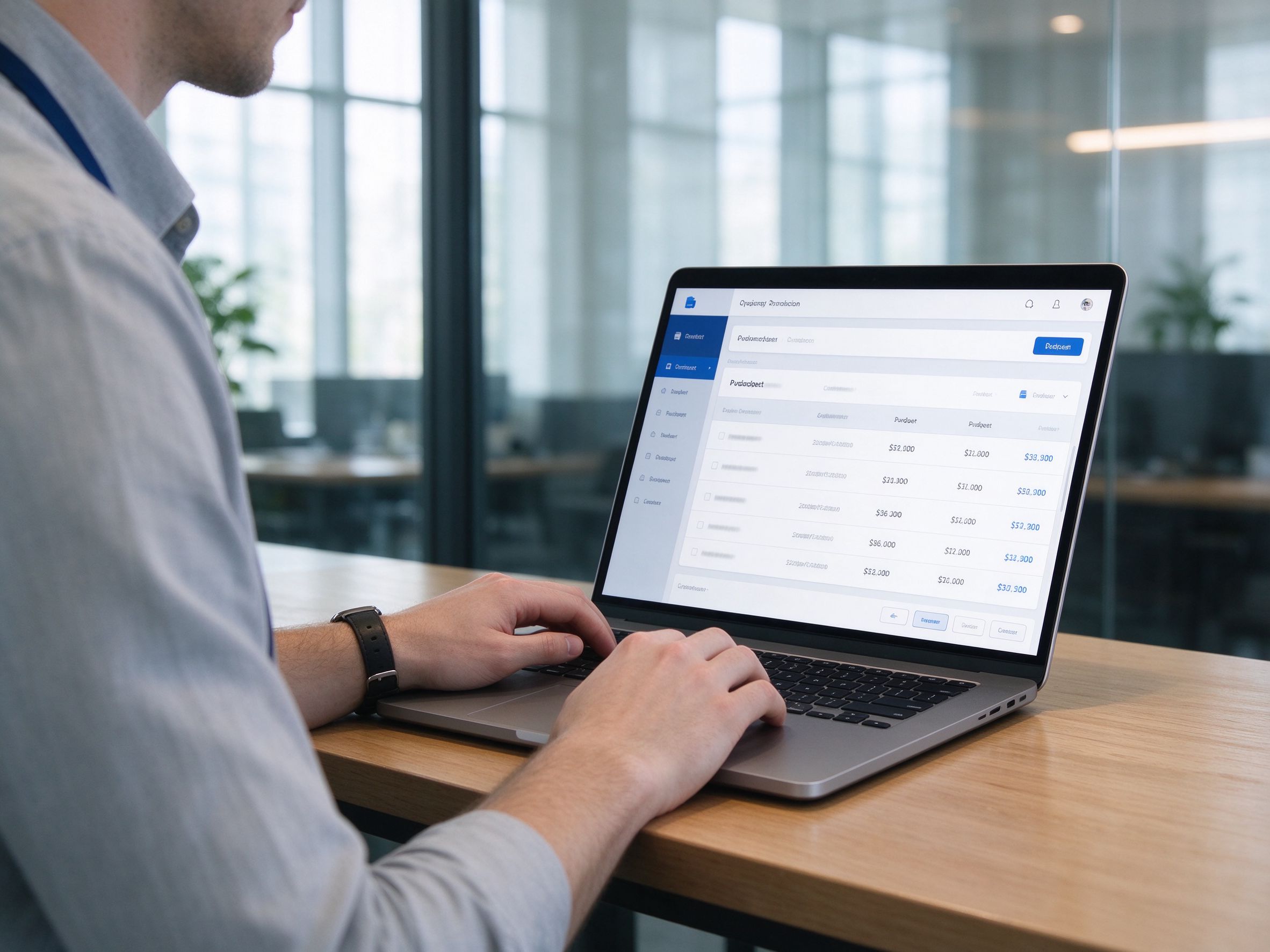
Order placement, document access and approval routing for a national supplier — removing an inbox-based process that consumed two full-time roles.
Read the case →
A fifteen-year-old on-premise line-of-business application moved to AWS in four stages with parallel running and no unplanned outage.
Read the case →These are not slogans. Each one is a commitment we are prepared to have measured, and each appears in some form in the contract.
The engineers who design your system are the engineers who build it and support it. No handover to a separate delivery group, no offshore subcontracting, no account manager relaying technical questions.
Architecture notes, data dictionaries, runbooks and deployment instructions are deliverables, not extras. If a new engineer can onboard from the repository alone, we have done the job properly.
Every integration we ship has reconciliation reporting. We treat a silent data mismatch as a severity-one defect, because an operation that cannot trust its own numbers cannot be managed.
Role-based access, audit trails, encrypted transport and storage, dependency scanning and patch windows agreed before launch. Access to production is logged and least-privilege.
Fixed-price for defined scopes, time-and-materials for exploratory work, and a written change process for anything in between. Cloud spend is reported monthly so infrastructure cost never becomes a surprise.
Source code, infrastructure definitions and documentation are yours. If you ever decide to move the work elsewhere, you can — there is no lock-in clause and no proprietary runtime you have to keep paying for.
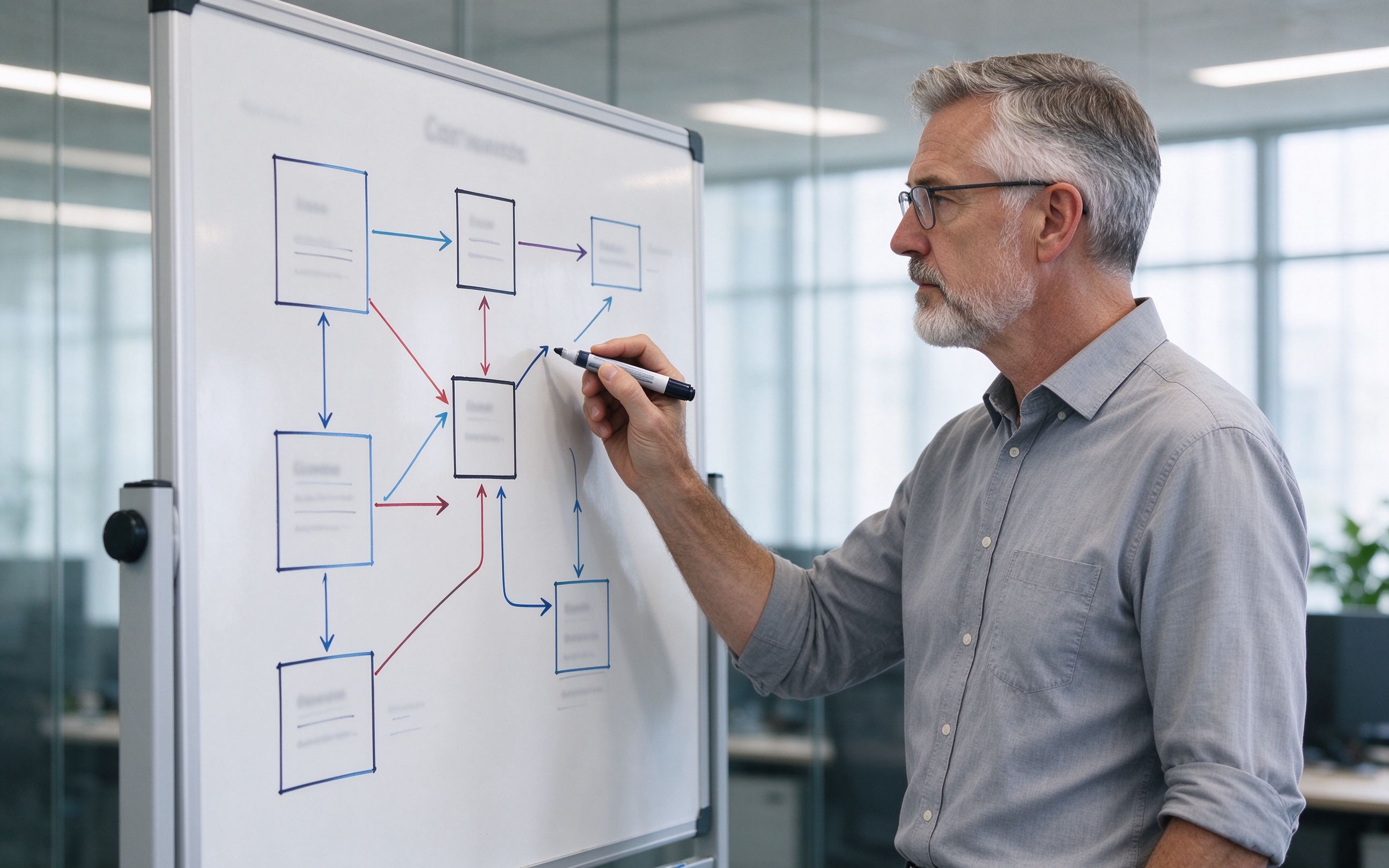
Vendor end-of-support dates, integration fragility and reporting demands are converging. A practical sequencing model for modernising without stopping the business.
Read article →
Every quick connector is a liability with an interest rate. How to measure your integration debt and which connections to retire first.
Read article →
Tagging discipline, right-sizing and environment policy that keep an AWS or Azure bill proportional to the value delivered.
Read article →A 45-minute scoping call, no obligation. We will tell you honestly whether custom software is the right answer.