Every piece here is written from delivered work with Australian mid-market operators — the resource-sector system running since before smartphones, the warehouse platform whose nightly sync fails once a fortnight, the reporting request that became a six-week data project. They are opinionated, occasionally contrarian, and deliberately not vendor-neutral.
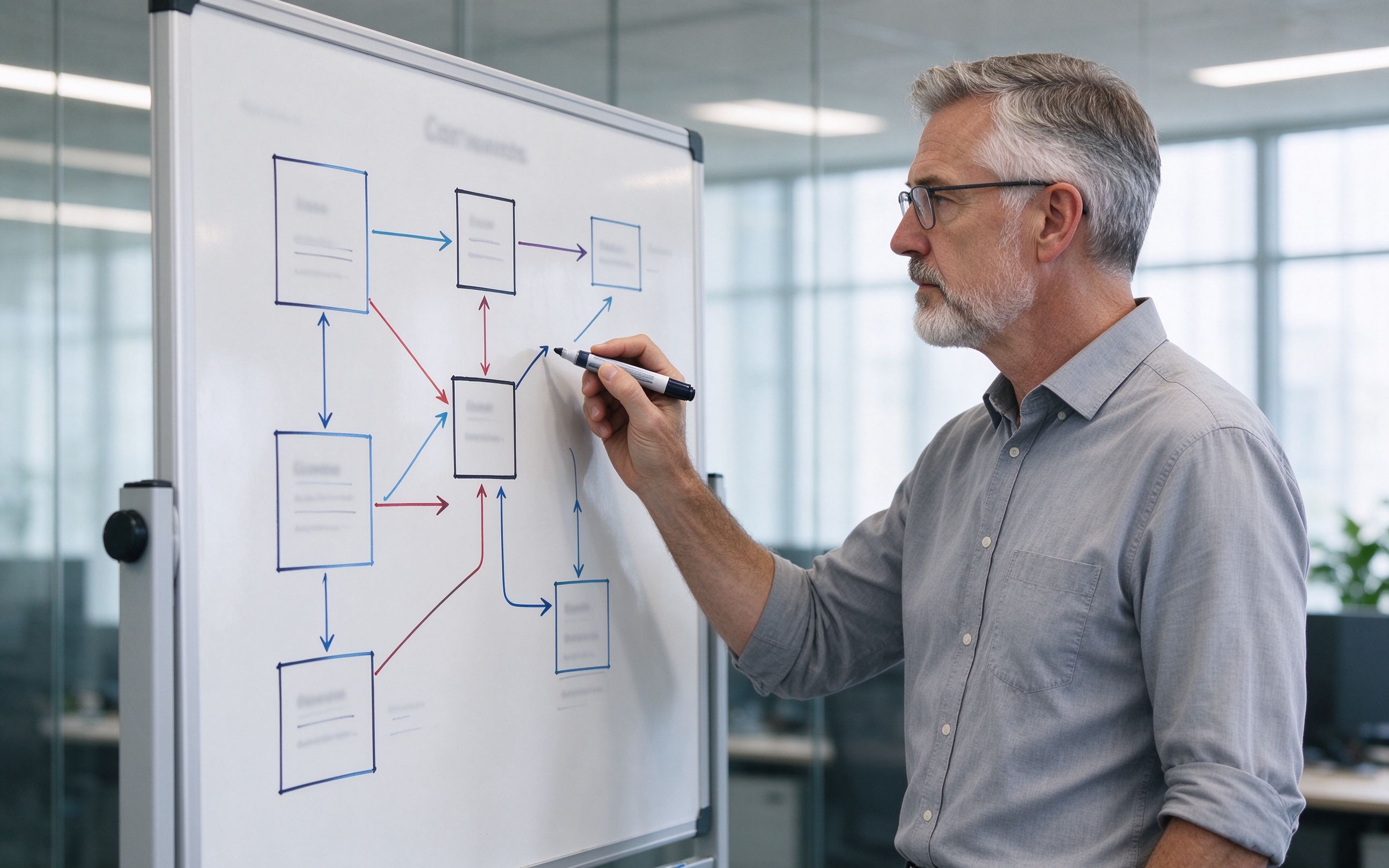
Vendor end-of-support dates get the blame, but they are only the proximate cause. The forces that actually push a WA operator to replatform are business rules nobody can review, reporting questions the system cannot answer, integration seams that break under load, and one person who understands how the month-end close really works. We set out a sequencing model that gets you off the old core without betting the business on a single cutover weekend.
Read article →
Four numbers tell you how much integration debt you are carrying, and one of them is how long a sync failure goes unnoticed. A method for deciding which connectors to retire first — and when a hub is not worth building.
Read article →
Cross-zone chatter, idle non-production compute and uncompressed log retention are design decisions that show up on an invoice twelve months later. Governance that actually holds, plus an honest account of what lift-and-shift buys you.
Read article →
Mid-market AI projects stall on missing master data, undocumented rules and no permission model for unstructured content. The near-term wins are extraction, classification and reconciliation — usually not a chatbot.
Read article →
Measurement window, planned maintenance, dependency carve-outs and who gets to declare an incident. Each extra nine costs disproportionately more, and for most operational systems fast recovery beats another nine.
Read article →
Roles modelled on real job functions, audit trails that answer questions, secrets handled properly and restores you have actually rehearsed. Why bolting security on before launch costs more than designing it in.
Read article →The evidence base is small and specific, and we would rather say so plainly than dress it up. We have been operating since 2021 and have delivered something in the order of forty systems across six sectors, most of them in Western Australia, and a meaningful share of that work is maintenance and integration on platforms we did not build. That mix matters: you learn more from supporting somebody else's system at 2am than from a greenfield build nobody has stressed yet.
So when we claim that big-bang replacement is where budgets die, or that a governed integration layer is not always justified, we mean that this is the pattern we have repeatedly observed in operational systems with small internal IT teams. It is observation, not survey research. Where a figure appears — a retainer range, a sequencing timeline — it is either an illustrative example or a range we would quote today.
We hold these views loosely enough to change them. Several have been revised after a client showed us a constraint we had not weighed properly. If you think a piece is wrong, we would like to hear it — a disagreement from someone running a similar operation is worth more than agreement from someone who is not. Write to info@techilasoftware.com.au and expect a reply from an engineer.
The caveat: we sell the kind of work these pieces describe. What we will not do is recommend an engagement the situation does not warrant, and several of these articles end by telling you not to do the project.
Each piece is written by the engineers who design, build and support these systems. No marketing team rewrites the conclusions, and no claim appears that the writer could not defend in a design review.
Nothing here is paid placement. Where we name a technology it is because we run it in production, and where a product is a poor fit for mid-market budgets we say that as well.
We are comfortable answering “it depends” when the data decides the answer, and equally comfortable recommending against a project when the cost outweighs the operational benefit. Both are common outcomes.
Send us the awkward details — the monthly reconciliation, the integration that fails quietly, the report nobody can produce.